818 Pine-A Grove Dr, Wilmington, NC 28409
Dental Implants vs. Dentures

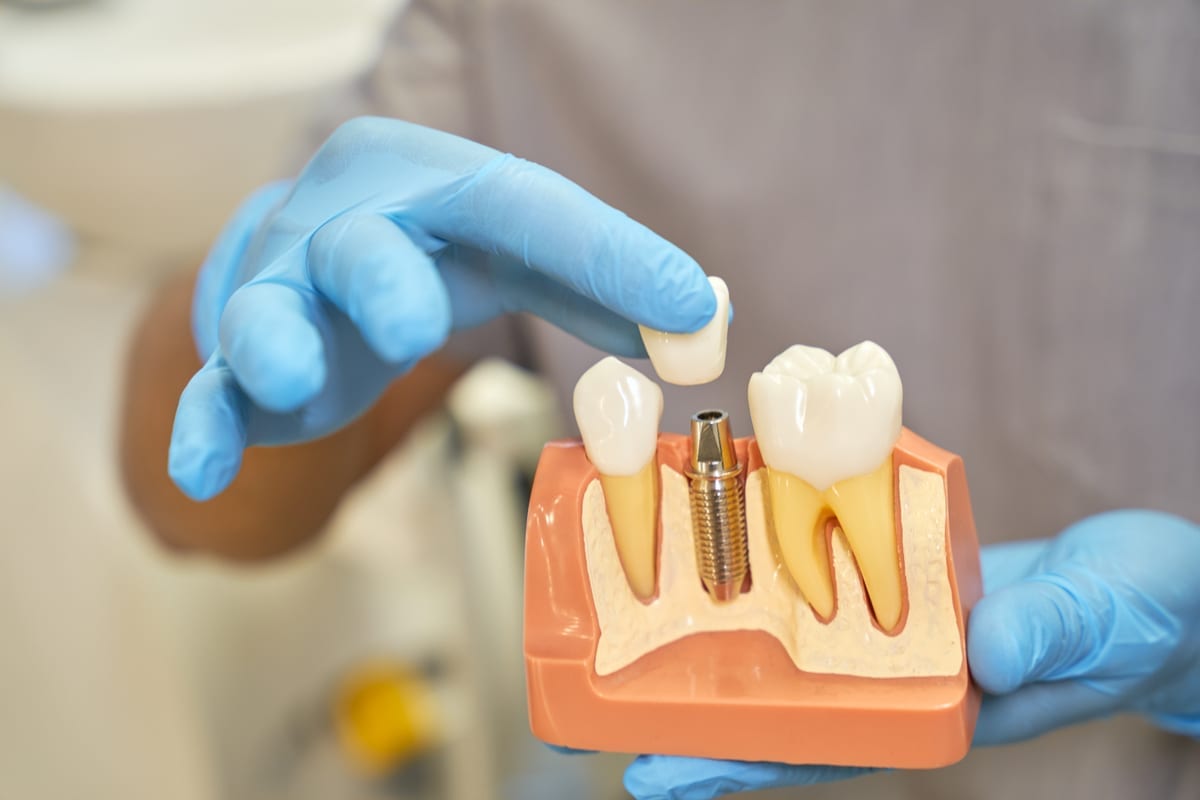
When it comes to replacing missing teeth, patients often ask about dental implants vs. dentures: which option really lasts longer? The answer is not one-size-fits-all. Your health, lifestyle, and long-term goals all play a role. Understanding the core differences helps you make a confident, informed decision.
Both options restore your smile and improve daily function. However, they work very differently inside your mouth. One anchors into your jawbone permanently. The other sits on top of your gums and can be removed. Knowing these differences is the first step toward choosing wisely.
How Dental Implants and Dentures Actually Work
Dental implants are titanium posts surgically placed into your jawbone. Over time, the bone fuses around the post through a process called osseointegration. A crown is then attached on top, creating a tooth that looks and acts like a natural one. The result is a stable, permanent solution built into your jaw structure.
Dentures, by contrast, are removable prosthetics that rest on your gum tissue. Traditional full dentures replace an entire arch of missing teeth. Partial dentures fill gaps when some natural teeth remain. Both types rely on suction, adhesive, or clasps to stay in place during daily use.
Dental bridges are a third option worth mentioning. A bridge fills a gap by anchoring to the teeth on either side of the space. Unlike implants, bridges require grinding down healthy adjacent teeth. This makes bridges less conservative than implants in many cases.
Dental Implants vs. Dentures: Comparing Long-Term Durability
Longevity is often the deciding factor for many patients. Dental implants, when properly cared for, can last a lifetime. The titanium post itself rarely needs replacement. The crown on top may need replacement after 15 to 25 years with heavy use.
Dentures have a much shorter lifespan by comparison. Most dentures need replacement every 5 to 10 years. Your jawbone changes shape over time after tooth loss. This causes dentures to fit poorly, leading to discomfort and the need for refitting or replacement.
Bridges typically last 10 to 15 years before they need attention. The teeth supporting the bridge can develop decay or damage underneath. When that happens, the entire bridge may need to be replaced. Implants sidestep this concern entirely since they stand independently.
Bone Health and Long-Term Oral Wellness
One of the most important differences involves your jawbone. When a tooth root is lost, the bone beneath it begins to shrink. This process is called bone resorption. Implants are the only replacement option that actively prevents this from happening.
The titanium post stimulates the jawbone just like a natural tooth root does. This keeps the bone strong and maintains your facial structure over time. Patients with dentures often notice their face appears sunken after years of use. This is a direct result of ongoing bone loss beneath the gums.
Bone loss also causes dentures to become loose over time. Loose dentures lead to sore spots, difficulty chewing, and reduced confidence. Implants do not shift or loosen because they are anchored securely in the bone. This makes a significant difference in everyday quality of life.
Comfort, Function, and Daily Life
Patients consistently report that implants feel more like natural teeth. You can eat, speak, and smile without worrying about slippage. There are no adhesives needed and nothing to remove at night. Most people forget they even have an implant after full healing.
Dentures require more daily maintenance. They must be removed, cleaned, and soaked overnight. Certain foods — like hard apples or tough meats — can be difficult or uncomfortable to eat. Many denture wearers modify their diet to avoid problems with fit or discomfort.
Here is a quick look at how these options compare day to day:
- Dental Implants: Fixed in place, no removal needed, natural bite force restored
- Full Dentures: Removable, lower bite force, may slip when eating or speaking
- Partial Dentures: Removable, clasps can irritate adjacent teeth over time
- Dental Bridges: Fixed, but require alteration of neighboring healthy teeth
Implants allow you to live without thinking about your teeth. That freedom is something denture wearers often say they miss most. Comfort and confidence go hand in hand when it comes to tooth replacement.
Who Is a Good Candidate for Each Option?
Not every patient is automatically a candidate for dental implants. Sufficient jawbone density is required to support the titanium post. Patients who have experienced significant bone loss may need a bone graft first. Overall health also plays a role in the surgical healing process.
Dentures are often recommended when patients cannot undergo surgery. They are also a faster and more accessible solution for some individuals. Cost is frequently a consideration as well, since implants typically require a larger upfront investment. However, long-term costs often balance out when you factor in denture replacements and repairs over the years.
Key factors that influence which option is right for you:
- Number of missing teeth (one, several, or a full arch)
- Current jawbone health and density
- Overall medical health and healing ability
- Desire for a permanent vs. removable solution
- Budget and long-term value considerations
Our dental team will evaluate your specific situation before recommending any treatment. A thorough examination, including X-rays, helps determine the best path forward. There is no universal answer — only the right answer for your unique needs.
Making Your Decision with Confidence
The comparison of dental implants vs. dentures comes down to your priorities. If longevity, bone preservation, and a natural feel are most important, implants are often the superior long-term choice. If a non-surgical solution is needed quickly, dentures can be a practical starting point. Bridges offer a middle ground but come with their own trade-offs.
Taking time to understand your options leads to better outcomes and fewer regrets. Our dental team at Mast Dental is here to walk you through every consideration. We believe an educated patient makes the most confident decisions. Learn More about how we can help you find the tooth replacement solution that fits your life.
Frequently Asked Questions
How long do dental implants really last compared to dentures?
Dental implants can last a lifetime with proper care, while dentures typically need replacement every 5 to 10 years. The implant post itself is very durable, and only the crown on top may eventually need renewal. Dentures lose their fit over time as the jawbone changes shape, requiring more frequent adjustments and replacements.
Can dentures eventually be replaced with dental implants?
Yes, many patients transition from dentures to dental implants. If significant bone loss has occurred from wearing dentures, a bone graft may be needed first. Our dental team can assess your current bone level and outline a realistic treatment plan for making the switch.
Are dental implants painful to get?
The procedure is performed under local anesthesia, so most patients feel little discomfort during placement. Some soreness and swelling are normal in the days following surgery. Over-the-counter pain relievers and proper aftercare typically manage post-procedure discomfort very effectively.
Do dental implants require special cleaning or maintenance?
Implants do not require any special tools beyond a regular toothbrush and floss. You brush and floss them just like natural teeth. Routine dental check-ups and cleanings remain important to keep the surrounding gum tissue healthy and the implant functioning well for the long term.
Is a dental bridge a better choice than an implant in some situations?
A bridge can be a good option when a patient lacks enough bone for an implant or needs a faster solution. However, bridges require shaping down the neighboring healthy teeth for support. Implants preserve those neighboring teeth and the jawbone, making them the preferred long-term option in most cases when candidacy allows.